Archive · Chronology
Chronology 年譜
A dated record of Miyagawa Kōzan I and the Makuzu house. Each entry is cited; entries labelled unverified rest on one secondary source.
- 1797寛政9
Birth of Miyagawa Chōzō (Makuzu Chōzō), Kōzan’s father; later a pupil of Aoki Mokubei. [1]
- c.1833–天保
After Mokubei’s death (1833) Chōzō sets up his kiln at Makuzugahara, Gion, Kyoto. Exact year unverified. [1]
- 1842天保13
15 Feb (Tenpō 13.1.6): Toranosuke born at Makuzugahara, fourth son of Chōzō. [2]
- c.1851嘉永4
From about age nine studies painting with the future Taigadō IV. [1]
- 1860万延元
Chōzō dies; Toranosuke inherits the house and takes the name Kōzan. [1][8]
- 1866慶応2
Shogunate commissions him to make wares for presentation to the Imperial Palace. [2]
- 1867慶応3
Accepts Igi Tadazumi’s invitation to the Igi kiln at Mushiage (Bizen); about two years of blue-and-white wares. [1]
- 1870明治3
Leaves for Yokohama at the invitation of Umeda Hannosuke, financed by Suzuki Yasubei. [1][2][8]
- 1871明治4
- 1872明治5
Workshop established; four Kyoto apprentices and local workers. [1]
- 1873明治6
Vienna World Exposition: prize reported. Unverified (auction-house note only). [10]
- 1876明治9
Philadelphia Centennial: high-relief Makuzu ware widely acclaimed. A serious fire; Kōzan rebuilds independently. [1][2]
- 1877明治10
First National Industrial Exhibition, Tokyo: the Emperor touches a Kōzan vase. [1][4]
- 1879明治12
South Kensington Museum (V&A) acquires a high-relief vase, inv. 308-1879. [10]
- 1881明治14
Second National Industrial Exhibition: Footed Bowl with Crabs (now TNM, ICP 2002). [5][6]
- 1889明治22
Paris Exposition Universelle: gold medal for yōhen glazes. [1][4]
- 1893明治26
Chicago World’s Columbian Exposition: honorary gold medal for a pair of stoneware vases. [1][3]
- 1896明治29
30 June: appointed Teishitsu Gigei-in (Imperial Household Artist), the second potter so honoured. [7][8]
- 1900明治33
Paris Exposition Universelle: only Japanese ceramic grand prix. [1][3]
- 1910明治43
Japan–British Exhibition, London; a vase later enters the V&A. [1][2]
- 1911明治44
Imperial commission: vase as a gift for the King of the Belgians. [1][4]
- 1913大正2
Last of 51 exhibitions at which he won prizes (1876–1913). [1]
- 1916大正5
20 May: Kōzan I dies. Hannosuke succeeds as Kōzan II. [2]
- 1917大正6
Hannosuke takes the name Kōzan II. [11]
- 1934昭和9
About this year the Kyoto Kōsai house (Kōsai IV) begins to use the Makuzu name jointly with the Yokohama house. [11]
- 1940昭和15
20 April: Kōzan II dies at home in Naka-ku, Yokohama, aged 82 by Japanese count. [12][11]
- 1941昭和16
- 1945昭和20
29 May: the Great Yokohama Air Raid destroys the kiln and house; Kōzan III, family and workers, 11 people in all, are killed. [2]
- Post-1945戦後
Tomonosuke (Kōzan IV, 1884–1959), who had been evacuated to Hiratsuka, tries to revive the kiln; with his death the Yokohama Makuzu line ends. [1][2]
- 2002平成14
26 June: Footed Bowl with Crabs designated Important Cultural Property. [5]
- 2009平成21
29 April: Miyagawa Kōzan Memorial Hall (Yamamoto collection) opens; later the Makuzu Museum, Yokohama Portside. [9]
- 2016平成28
Centenary retrospective, Suntory Museum of Art (24 Feb–17 Apr), touring to Osaka and Seto; also Okayama Prefectural Museum of Art, March 2016 (Yamamoto collection). [8][2]
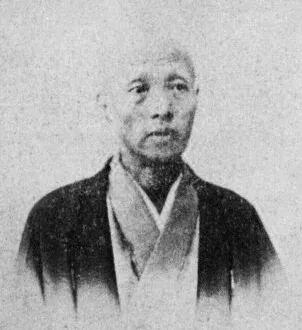
Unknown authorUnknown author · Public domain · via Wikimedia Commons

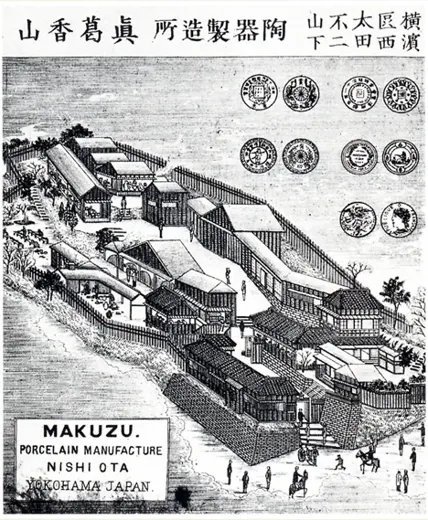
Yurindo · Public domain · via Wikimedia Commons

Photo © Christie's, via lot page; archival reference, not openly licensed
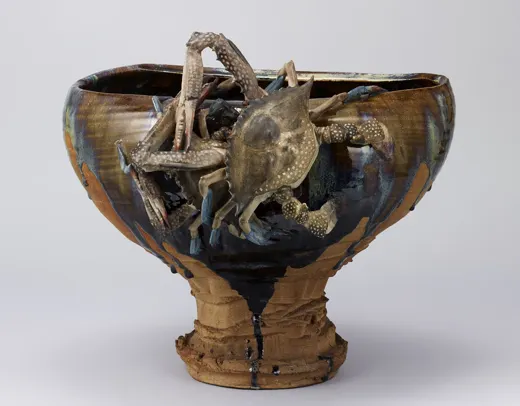
Tokyo National Museum · CC BY 4.0 · via Wikimedia Commons

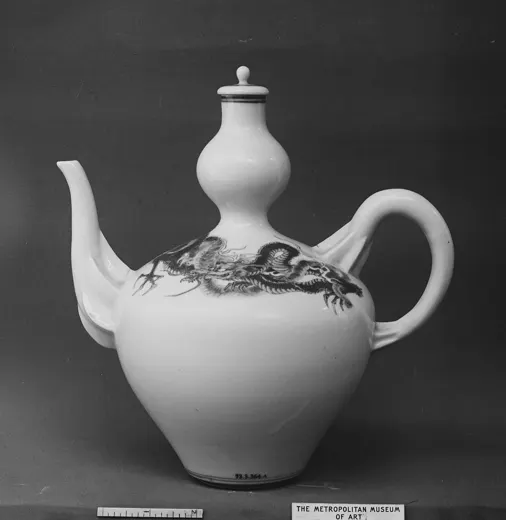
Makuzu Kozan · CC0 · via Wikimedia Commons

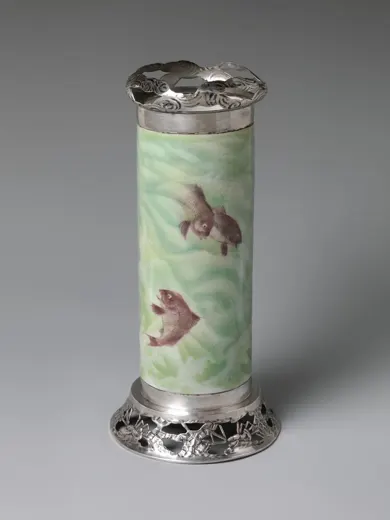
Makuzu Kozan · CC0 · via Wikimedia Commons

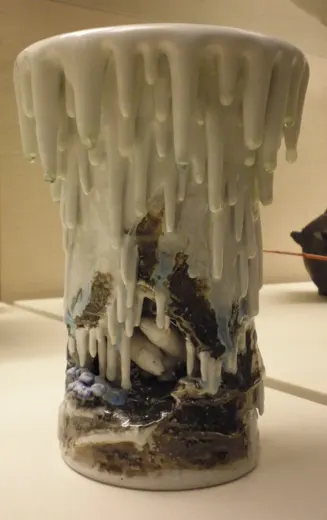
David Jackson · CC BY-SA 2.0 uk · via Wikimedia Commons

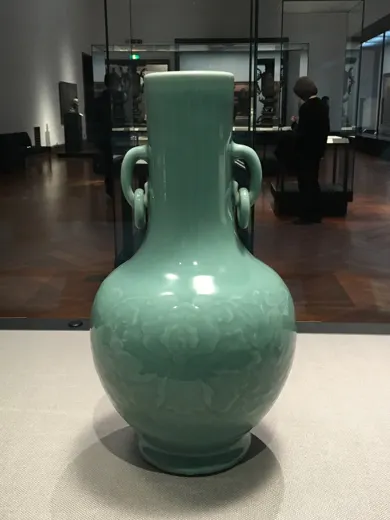
Gryffindor · CC0 · via Wikimedia Commons

Sources典拠
- Wikipedia (English), “Makuzu Kōzan”, en.wikipedia.org, accessed 23 Oct 2026.
- Wikipedia (日本語)「宮川香山」, ja.wikipedia.org, accessed 23 Oct 2026.
- Moyra Clare Pollard, Master Potter of Meiji Japan: Makuzu Kōzan (1842–1916) and His Workshop, Oxford University Press, 2002. ISBN 978-0-19-925255-8. (Cited via Wikipedia page references; not yet consulted directly.)
- Joe Earle, Splendors of Meiji: Treasures of Imperial Japan. Masterpieces from the Khalili Collection, Broughton International, 1999. ISBN 1874780137. (Cited via Wikipedia; not yet consulted directly.)
- 文化庁 国指定文化財等データベース「褐釉蟹貼付台付鉢〈宮川香山作/〉」, kunishitei.bunka.go.jp.
- ColBase / Tokyo National Museum, G-105, colbase.nich.go.jp; e国宝 emuseum.nich.go.jp.
- 『官報』第3901号, 1 July 1896 (cited in Japanese Wikipedia; original not yet consulted).
- 「没後100年 宮川香山」 Miyagawa Kozan Retrospective, Suntory Museum of Art, 24 Feb–17 Apr 2016; listing at NACT Art Commons and museum.or.jp (tour venues).
- 宮川香山 眞葛ミュージアム (Makuzu Museum), kozan-makuzu.com and guide.
- Bonhams, Fine Japanese and Korean Art, New York, 18 Sep 2024, lot 802, bonhams.com (catalogue footnote).
- 真葛 宮川香齋 (Makuzu Miyagawa Kōsai house, Kyoto), 「真葛の歴史・歴代当主」, makuzu-yaki.jp/ja/history, accessed 23 Oct 2026. Family-published source.
- 東京文化財研究所 東文研アーカイブ「宮川香山」(obituary of Kōzan II, d. 20 Apr 1940, from 『日本美術年鑑』), tobunken.go.jp.